Browse Breeds A-Z
Working Group

Samoyed

AdaptableFriendlyGentle
Samoyed

Height

21-23.5 inches (male), 19-21 inches (female)

Weight

45-65 pounds (male), 35-50 pounds (female)

Life Expectancy

12-14 years

Size

Medium

What Samoyeds are like

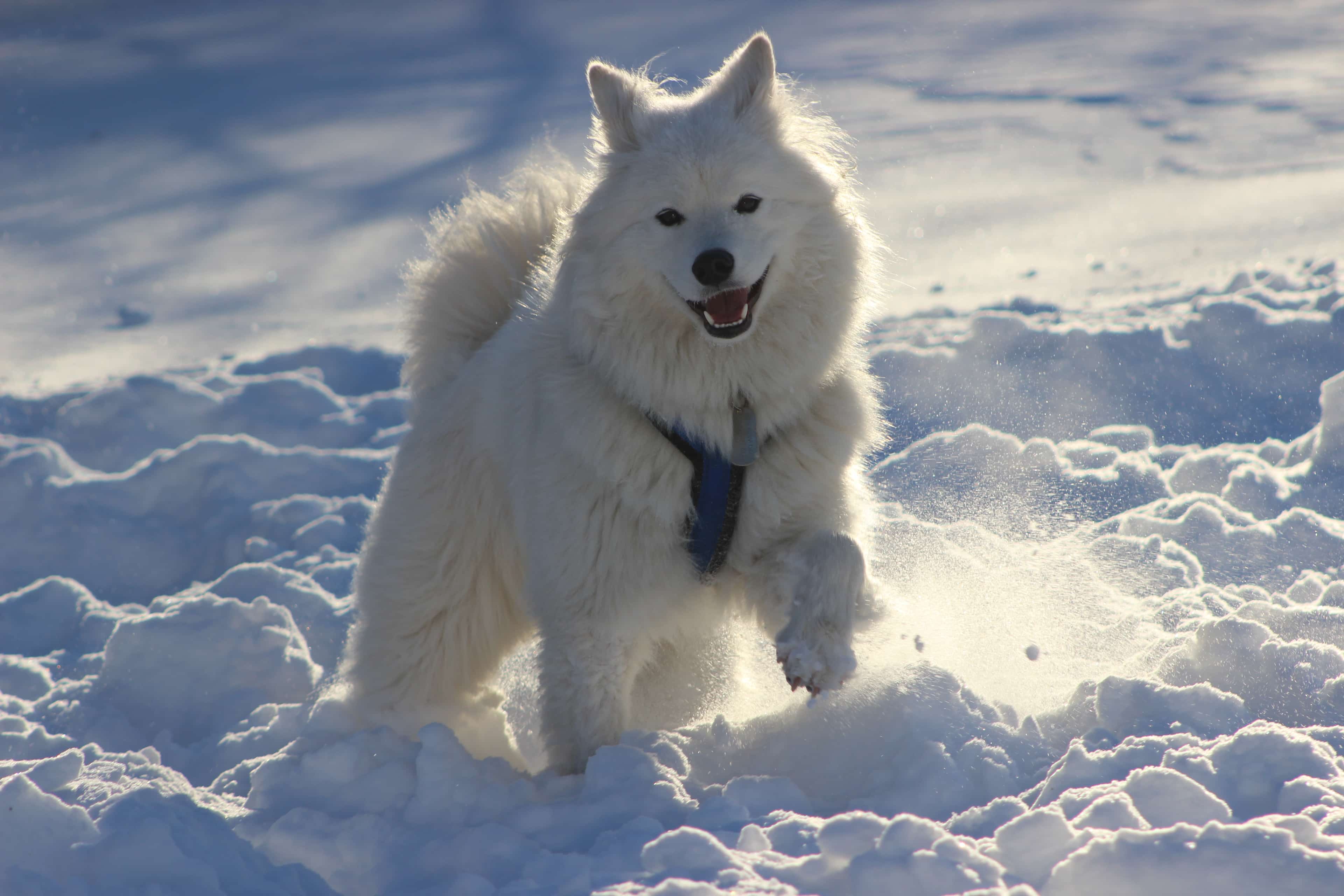
Samoyeds are medium working dogs with a big white coat, a famous smile, and a strong need to be part of everyday family life. Most adults stand about 19 to 23.5 inches tall and usually weigh about 35 to 65 pounds, so they are not giant dogs, but they are still sturdy, strong, and more substantial than many people expect from the fluffy look alone. In the right home, a Sammy feels bright, playful, affectionate, and full of personality. In the wrong home, the same dog can feel loud, hairy, demanding, and harder to manage than the pretty face suggests. That smart, social, and mischievous mix matters. This is not usually a background pet that gets a quick walk and then entertains itself. It is a people-loving working dog that tends to do best when life has structure, company, and daily activity.

Is the Samoyed right for your home?

Best match for...

A home that wants a friendly active dog, has time for daily exercise and regular training, can keep up with heavy shedding and brushing, and does not plan to leave the dog alone or parked outside for long stretches.

Active homes
Hands-on owners
People-first routines

Strong fit if...

You want a cheerful dog that likes being close to people

This is one of the breed's biggest strengths. Samoyeds are usually at their best when they feel woven into family life instead of shut out from it. The breed is social, and many Sammies want to know where everyone is, join the activity, and stay near the people they love.

You are ready for a dog that needs real daily movement

A Samoyed may look like a cloud, but it was bred to work. The breed needs daily exercise and enjoys play in a safely fenced yard or long walks on leash. This usually fits homes that like getting outside, playing, walking, and giving the dog something to do.

You can stay ahead of brushing, fur, and shedding season

The coat is beautiful, but it is never free. Samoyeds shed all the time and even more heavily once or twice a year when the coat blows. If you can live with brushing, loose hair, extra vacuuming, and the reality that the coat is part of your routine, the breed feels much easier.

You enjoy training and can be steady about rules

Samoyeds are smart and trainable, but they are not usually push-button easy. They need structure, should be taught what is expected early, and need practice often. If you like a dog with personality and do not mind doing the work, that can feel rewarding instead of frustrating.

Think twice if...

You need a quiet dog for very noise-sensitive living

Canine Scout's live trait cards already mark this breed as a high-barking dog, and that matches the real tendency toward frequent vocalizing. That does not mean every Samoyed barks nonstop. It does mean this is not the safest pick for people who want the quietest possible dog in an apartment wall-to-wall with neighbors.

The dog will spend long stretches alone or out in the yard

A Sammy kept away from people becomes miserable and destructive. If your plan depends on a dog being emotionally fine alone all day or living mostly outside, a Samoyed will usually feel like a poor match no matter how pretty the breed looks.

You want a low-maintenance fluffy dog

A lot of people see the coat and imagine a soft easy companion. The daily reality is different. This breed needs brushing, nail care, cleanup, and real patience during heavy shedding periods. If you want the fluffy look without the work that comes with it, the coat can turn from charming to exhausting very quickly.

Your containment is loose and you want easy off-leash freedom

Samoyeds have a strong urge to roam and may travel for miles if they get loose. Weak fencing, open doors, or casual off-leash habits can create real problems with this breed, so the smoother homes think hard about gates, leashes, and secure routines.

Compare similar fluffy working breeds

If you are comparing other fluffy working breeds, start with the Siberian Husky, Great Pyrenees, and Chow Chow, then use the breed compare tool to line up the tradeoffs side by side or try the match quiz and breed mixer for a broader fit check.

What daily life feels like

Daily life

White fur becomes part of the house

With a Samoyed, the coat is not just a look. It shapes the week. A profuse double coat with a harsh outer layer and a thick undercoat means brushing, loose hair, and coat checks become normal life. During heavy shedding periods, it can feel like the dog is making a second dog out of fur on your floor.

Daily life

The dog usually wants to be in the middle of family life

A Samoyed often feels happiest when it gets to move through the day with its people. That can be lovely if you want a dog that feels social and connected. It can feel like a lot if you hoped for a more emotionally independent pet. The appeal here is a bright dog that wants company and often notices everything.

Daily life

Exercise matters, but so does safe routine

Daily movement helps, but the breed also needs structure around that movement. Walks, play sessions, and fenced-yard time are all useful. So is staying realistic about the roaming streak. This is one of those breeds where a solid leash habit and secure boundaries matter almost as much as the exercise itself.

Daily life

The smile and sweetness do not cancel out the work

Many people fall for the grin first, and that makes sense. Samoyeds are charming. But the easiest homes are the ones that remember they are still living with a working dog that needs training, cleanup, and attention. When expectations stay honest, the personality feels fun rather than overwhelming.

Training and handling

Training

Start manners early and keep practicing

Because Samoyeds are smart, social, and mischievous, small bad habits can become big habits fast. Pulling, barking for attention, ignoring a cue, or turning excitement into chaos can all grow if nobody stays consistent. Teaching expectations early is exactly the right move here.

Training

Firm and loving usually works better than harsh

The breed needs a firm but loving hand in training. In plain language, that means clear rules, repetition, patience, and follow-through. A Samoyed is usually not the best student for a sloppy plan, but it is also not a breed that benefits from rough handling or frustrated shouting.

Training

Treat boredom like a real problem, not a small one

A lonely or underworked Samoyed often creates its own fun, and owners rarely enjoy the version the dog invents. Barking, mischief, digging, and general chaos are much easier to prevent than to undo later. Training works best when it is paired with enough movement, enough company, and enough normal daily engagement.

Health and cost

Plan for it

Ask breeders for a real screening list

This breed's health conversation should stay specific. Responsible breeders test for hip dysplasia plus eye and cardiac disorders, and the listed recommended screens include a hip evaluation, cardiac exam, ophthalmologist evaluation, and DNA tests for RD/OSD and X-linked PRA. Ask for actual documented screening results instead of settling for broad promises.

Plan for it

Teeth and routine care still matter

A Samoyed's teeth should be brushed often, and regular vet visits help support a long healthy life. Families sometimes focus so hard on the big white coat that they treat dental care and normal checkups like side tasks. They are not side tasks.

Plan for it

The coat comes with recurring costs

Even if you do much of the brushing yourself, this breed still tends to bring real ongoing expenses. Good brushes and combs, nail care, extra cleaning, vet care, and sometimes professional grooming all add up. The breed is not giant-dog expensive, but it is not a cheap easy-maintenance dog just because it sits in the medium-size range.

Plan for it

Twelve to fourteen years is a long commitment to stay involved

A Samoyed can be with a family for a long stretch of life. That is a big part of the appeal. It is still worth being honest that this is a long run of exercise, company, coat care, and training. The breed fits best when people want that steady involvement for the long haul.

Did you know?

The famous smile had a job to do

The upturned corners of the Samoyed's mouth helped keep drool from freezing into icicles in Arctic weather. So the smile is not just cute. It is part of the breed's cold-weather design story.

Samoyeds first worked with reindeer people in Siberia

The breed traces back to the Samoyede people, who depended on reindeer and later used these white dogs to help herd and protect the herds. That history helps explain why the breed still feels hardy, social, and built to stay close to people.

The first U.S.-registered Samoyed arrived in 1906

A dog named Moustan of Argenteau became one of the first Samoyeds formally registered in the United States in 1906. That is a useful marker for how long the breed has been part of organized dog history in the country.

Famous polar explorers used Samoyeds

Scott, Shackleton, and Amundsen all traveled with Samoyeds. The breed's working history is not just decoration. It is tied to real hauling and survival in very hard conditions.

Breeds similar to the Samoyed

Browse all breeds

Breed Traits

Energy Level4/5
Trainability4/5
Health Concerns2/5
Barking Tendency5/5
Good with Kids5/5
Good with Dogs3/5