Browse Breeds A-Z
Working Group

Kangal Dog

AlertIndependentDevoted
Kangal Dog

Height

About 29-33 inches (male), 27-31 inches (female)

Weight

About 110-145 pounds (male), 90-130 pounds (female)

Life Expectancy

About 10-13 years

Size

Giant

What Kangal Dogs are like

The Kangal Dog is a giant Turkish livestock guardian bred to stay with sheep and goats, notice danger, and make calm independent decisions. A well-raised Kangal can be devoted and steady with its own people. It is still a serious guardian breed that needs thoughtful socialization, secure boundaries, and an owner who does not expect an eager-to-please pet.

Kangal and Anatolian Shepherd Dog are names people often use loosely, which can make a puppy search confusing. If registration or lineage matters to you, ask to see the parents' registration, pedigree, health records, and the registry the breeder uses. Do not assume that a photo, color, or seller's label settles the question.

Is the Kangal Dog right for your home?

Best match for...

Experienced Owners
Secure Yards
Hands On Owners

Strong fit if...

You understand guardian-breed responsibility

You specifically want a livestock guardian or serious independent companion and are prepared for the responsibility of a dog this large.

Secure fencing is already part of your plan

You can provide strong fencing, careful gate and visitor routines, and supervised introductions to new people and animals.

You will train before the puppy is enormous

You are ready to teach leash manners, settling, handling, and calm behavior before a powerful puppy reaches adult size.

Steady routines fit your life

You can make room for regular walks, training, quiet family time, and a safe place for the dog to move and rest.

You will choose the individual dog carefully

You will consider the dog's history and temperament closely when children, cats, small pets, frequent visitors, or other dogs share the home.

Think twice if...

You want an easy first dog

A Kangal is a hard fit for someone who wants an easygoing social butterfly or a dog that can safely run loose in unfenced places.

Your boundaries are not robust

Weak fencing, frequent unplanned visitors, close neighbors, or loose gate routines can make a guardian dog's daily life hard to manage safely.

You want a personal-protection dog

Do not encourage guarding of people or train a Kangal to threaten or attack on command. This livestock guardian is not a personal-protection dog.

A large yard would replace shared work

Space helps only when it comes with training, companionship, walks, and a useful routine. A Kangal cannot be left to manage itself.

You cannot plan for visitors and other animals

A very large independent guardian needs careful management around children, unfamiliar animals, guests, deliveries, and changing household routines.

What daily life feels like

Daily life

Fencing and calm routines are basics

Guardian dogs notice movement and sounds beyond the property, and a Kangal can be strong, quick, and determined when it decides to investigate. Check gates, fence lines, digging spots, and visitor procedures before bringing one home. Do not rely on a future recall cue to solve a boundary problem.

Daily life

Exercise should be steady, not extreme

Most adults need regular walks, safe room to move, training, sniffing, and time with their people. A secure yard can help, but it does not replace shared activity or guidance. Growing dogs need gradual conditioning rather than hard exercise or sudden weekend marathons.

Daily life

The coat is practical, but it sheds

The fairly short, dense double coat is not low-maintenance. Undercoat shedding becomes heavier as seasons change, so brushing matters more then. Regular nail trims, ear checks, tooth care, and checks for burrs or skin irritation after outdoor time belong in the routine.

Daily life

Visitors, children, and pets need an individual plan

Some Kangals live successfully with children, cats, livestock, or other dogs. Others find busy movement, unfamiliar dogs, or a stream of visitors difficult. Teach children gentle interaction, supervise carefully, and ask direct questions about an individual dog's history and needs.

Training and handling

Training

Start before the dog is enormous

Begin with the skills that make daily life safe: recall in a secure area, walking without pulling, waiting at doors, settling on a bed, accepting grooming, riding calmly, and moving away from gates when asked. Short reward-based sessions and clear household rules are more useful than power struggles.

Training

Socialization should build calm confidence

Socialization does not mean asking a Kangal to greet everyone. It means teaching the dog, at an age-appropriate pace, that ordinary life can be safe: calm people, surfaces, handling, vehicles, household noise, and predictable visitor routines.

Training

Give a livestock guardian a managed job

On a farm, a Kangal still needs oversight, training, safe introductions, and secure boundaries. In a companion home, the job may be family routines, supervised walks, scent games, basic training, and a secure place to rest. Structure matters without asking the dog to take responsibility for every person or animal that passes by.

Health and cost

Plan for it

Ask breeders for verifiable health records

Ask to see actual records, not a verbal promise. Discuss hip and elbow evaluation, plus patella, eye, cardiac, thyroid, and DNA screening with the breeder and your veterinarian. Records help you ask better questions, but they cannot guarantee that a puppy will never develop a health problem.

Plan for it

Know the signs of bloat

Kangals are large, deep-chested dogs, so bloat is worth a direct conversation with your veterinarian. Go to an emergency veterinarian immediately for repeated unproductive retching, a swollen or painful belly, heavy drooling, panting, pacing, pale gums, weakness, or collapse.

Plan for it

Giant-dog costs add up

Plan for a strong crate or safe room, durable walking equipment, training, secure fencing, preventive medication sized for a large dog, grooming supplies, boarding or pet care, and emergency veterinary costs. A Kangal is easiest to enjoy when the household has planned for its size and strength.

Did you know?

A Kangal is a guardian, not a stock-moving dog

The breed's original work was to stay with a flock and protect it. That is different from herding breeds that move animals from place to place on a handler's cues. Independent decision-making is a feature of that job.

The black mask is part of the familiar look

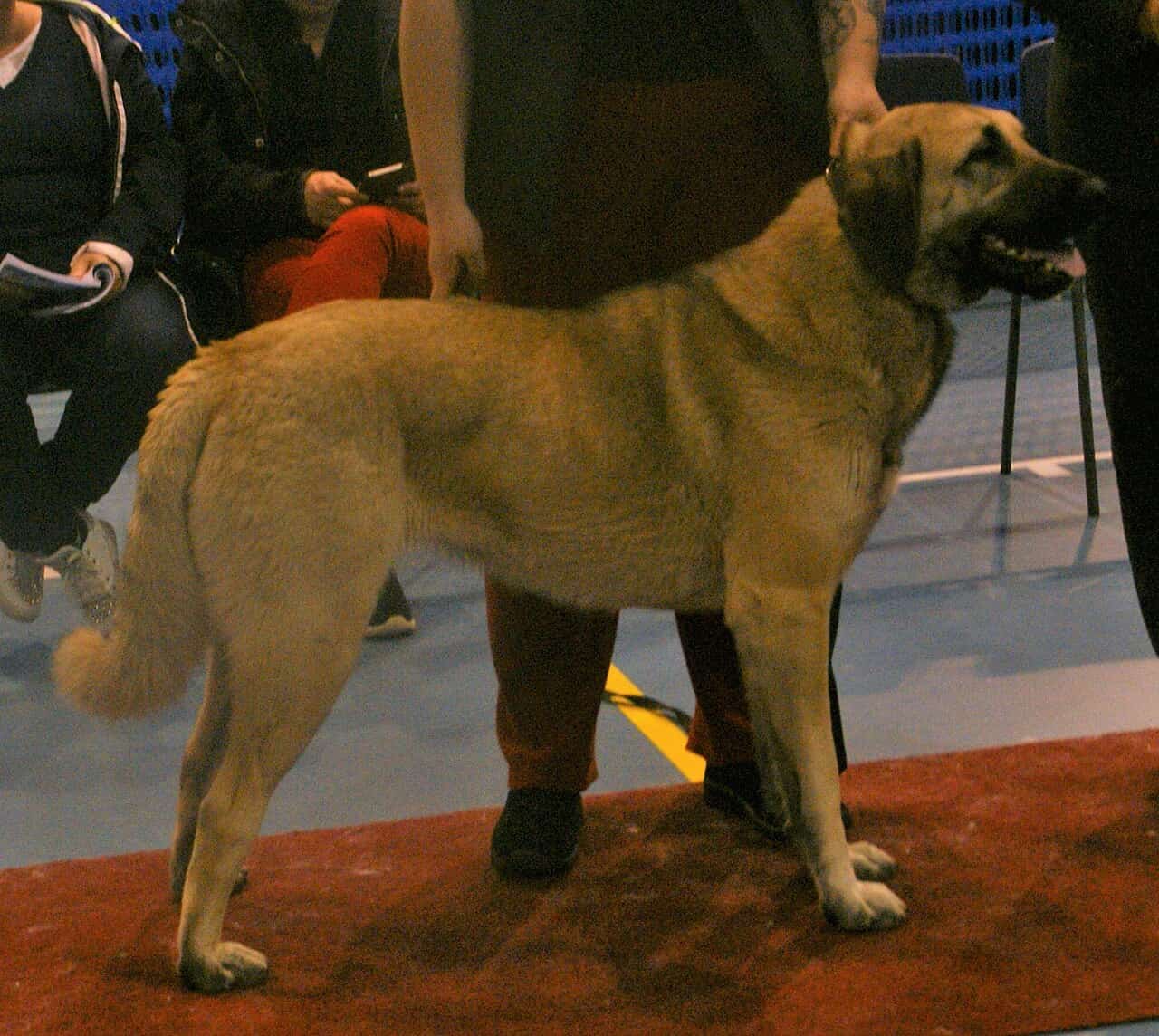
The familiar Kangal look is a cream to pale tan or fawn body coat with a dark or black mask and dark ears. Color alone never proves a dog's identity or quality.

Calm does not mean low-management

A mature Kangal may rest for much of the day, then become alert when it hears or sees something unusual. Good boundaries matter before the dog decides a delivery driver, loose dog, or wildlife needs its attention.

More ways to compare the Kangal Dog

Kangal Dog FAQ

FAQ

Are Kangal Dogs aggressive?

Kangals should not be labeled aggressive by default. They are guardian dogs with strong territorial and protective tendencies, so they need sound breeding, early socialization, careful management, and responsible handling. Do not assume any Kangal will be friendly with every stranger, dog, or animal.

FAQ

Are Kangal Dogs good family dogs?

They can be devoted to their own household, but they are not an automatic fit for every family. The right home has adults who can manage a very large independent dog, supervise children, plan visitor routines, and choose an individual dog whose temperament and history suit the household.

FAQ

Can Kangal Dogs live in an apartment or city home?

Some may adapt with exceptional management, but the breed is often a difficult fit for apartments, close neighbors, or busy urban routines. Size, alert barking, fence needs, visitor traffic, and guardian instincts all need a realistic plan.

FAQ

Do Kangal Dogs need a fenced yard?

They need secure boundaries. For many companion homes, that means robust fencing and carefully managed gates. A yard is helpful only when it is safe; it does not replace walks, socialization, training, or time with the family. Do not trust a Kangal off leash in an unfenced area.

FAQ

How much exercise does a Kangal Dog need?

There is no one number that fits every Kangal. Adults generally need regular, steady activity, training, and safe movement. Puppies need gradual conditioning that accounts for their growth. Adjust the plan for the dog's age, health, weather, fitness, and behavior rather than trying to exhaust it.

FAQ

Do Kangal Dogs shed a lot?

Yes. Their double coat sheds, with heavier undercoat shedding during seasonal changes. Regular brushing helps control loose hair, but a Kangal is not a low-shedding choice.

FAQ

What health tests should a Kangal breeder provide?

Ask for verifiable hip and elbow evaluation records at a minimum, then discuss eye, cardiac, thyroid, patella, and DNA screening with the breeder and your veterinarian. Also ask about the health and temperament of close relatives. Test results are useful information, not a lifetime guarantee.

FAQ

How long do Kangal Dogs live?

Kangals are commonly estimated to live about 10-13 years. An individual dog's lifespan can be shorter or longer. Genetics, routine care, body condition, injuries, disease, environment, and chance all play a role.

Breeds similar to the Kangal Dog

Browse all breeds
Anatolian Shepherd Dog

Anatolian Shepherd Dog

Working Giant Medium energy

Anatolian Shepherd Dogs are giant working dogs that usually bring independent, loyal, and reserved traits into everyday life. They tend to reward homes that are prepared for space and handling strength and that have the confidence to manage a bigger dog.

Great Pyrenees

Great Pyrenees

Working Giant Medium energy

Great Pyrenees are giant livestock-guardian dogs that stay calm, patient, and watchful while keeping an eye on home or flock. They fit best with owners who have room, secure fencing, and realistic expectations about barking, shedding, and independent training.

Caucasian Shepherd Dog

Caucasian Shepherd Dog

Working Giant Medium energy

The Caucasian Shepherd Dog is a giant working breed that tends to come across as bold, fearless, and kind once it settles in. They usually make the most sense for homes with the space and handling confidence for a bigger dog and owners who are realistic about space and handling strength and health screening and long-term vet planning.

Tibetan Mastiff

Tibetan Mastiff

Working Giant Medium energy

People are often drawn to the Tibetan Mastiff for its independent, intelligent, and reserved mix wrapped in a giant working frame. They fit best when homes where training and structure are part of the weekly routine can plan around space and handling strength and regular coat cleanup instead of treating the breed like a plug-and-play match.

Boerboel

Boerboel

Working Giant Medium energy

Boerboels are giant South African guardian dogs that fit best with experienced households that can manage serious size, watchful instincts, secure containment, and consistent training.

Mastiff

Mastiff

Working Giant Medium energy

Mastiffs are giant working dogs that usually bring courageous, dignified, and good natured traits into everyday life. They tend to reward family households that want a dog involved in everyday home life that are prepared for heat and breathing-related management and space and handling strength.

Breed Traits

Energy Level3/5
Trainability2/5
Shedding3/5
Health Concerns3/5
Barking Tendency4/5
Good with Kids2/5
Good with Dogs2/5